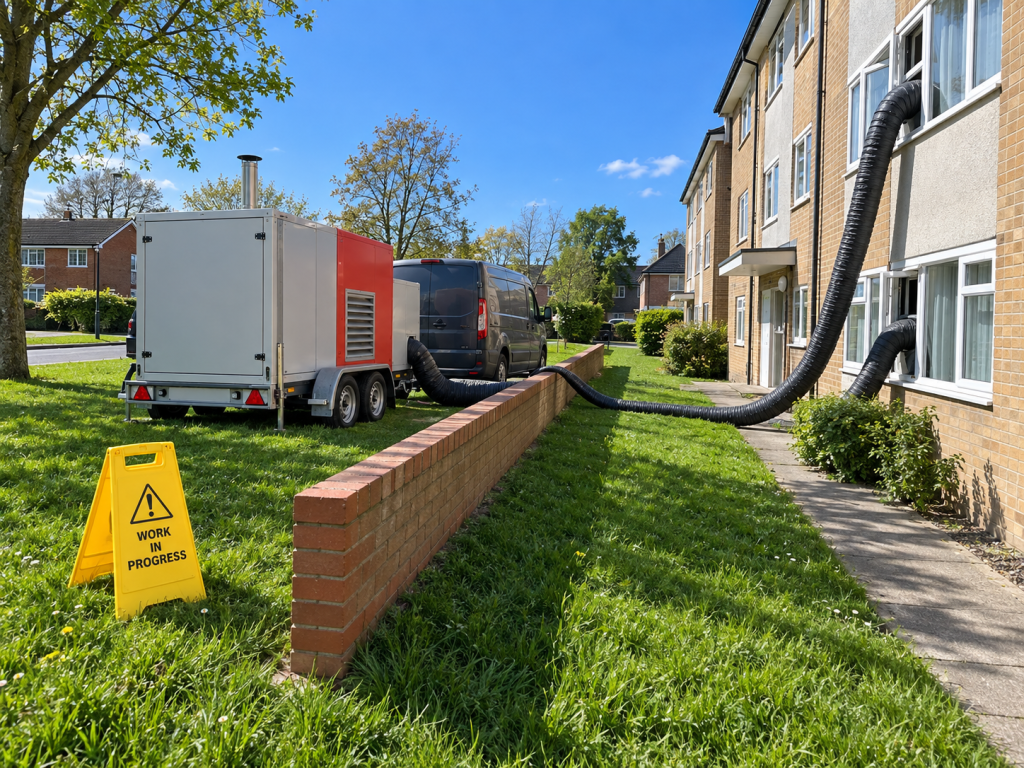
How Bed Bug Heat Treatment Works
Bed bug heat treatment uses specialist heating equipment, controlled air circulation and temperature monitoring to raise affected rooms or areas to treatment temperatures capable of killing bed bugs throughout their life cycle.
Thermo-Shield plans each treatment around the property, the extent of activity and the areas that need to be treated.
The process involves much more than simply making a room hot. Effective heat treatment depends on preparation, equipment placement, airflow, temperature monitoring and maintaining suitable conditions throughout the treatment area.
Request a Heat Treatment Quote
The Bed Bug Heat Treatment Process
A professional bed bug heat treatment is normally carried out in several stages.
The exact process can vary depending on the size and construction of the property, but the principles remain the same.
01 – Assessment
Before treatment begins, the property is assessed to establish the extent of known or suspected bed bug activity.
We consider factors including:
- number of affected rooms
- property layout
- building construction
- furniture and contents
- access requirements
- adjoining rooms or areas
- previous treatments
- heat-sensitive items
This information helps determine the treatment area, equipment requirements and preparation needed.
In multi-room properties such as HMOs, hotels or student accommodation, it may also be necessary to consider whether activity has spread beyond the room where bed bugs were first reported.
02 – Preparation
Correct preparation is an important part of the heat-treatment process.
Many normal household belongings and furnishings can remain within the treatment area, but some items may be unsuitable for elevated temperatures.
Clients receive preparation instructions before treatment explaining what should remain in place and what may need to be removed or protected.
Depending on the property, this may include certain:
- aerosols and pressurised containers
- medicines
- heat-sensitive materials
- flammable products
- specialist equipment
- delicate personal belongings
Preparation should be carried out carefully.
Simply emptying an infested room is not recommended, as moving untreated belongings can potentially spread bed bugs into other areas.
03 – Equipment Setup
Specialist heating and air-circulation equipment is positioned throughout the treatment area.
The layout of the equipment is planned around the size and shape of the rooms, furniture, building construction and potential bed bug harbourages.
Air movement is particularly important.
Warm air needs to circulate throughout the treatment area rather than allowing individual parts of the room to become hot while other locations remain significantly cooler.
Equipment may therefore be adjusted or repositioned during treatment as temperatures develop.
04 – Controlled Heating
The temperature within the treatment area is raised progressively.
The objective is not simply to create the highest possible air temperature.
Heat needs time to move into furniture, bed frames, cracks, joints and other locations where bed bugs may be concealed.
Gradual, controlled heating also allows the treatment team to monitor how the property is responding and manage areas that heat more quickly or more slowly than others.
The required treatment conditions will depend on the treatment plan and the temperatures achieved within representative harbourage areas.
05 – Temperature Monitoring
Temperature monitoring is one of the most important parts of professional heat treatment.
A room may feel extremely hot while concealed areas remain cooler.
For that reason, Thermo-Shield uses temperature sensors positioned at representative locations throughout the treatment zone.
These may include areas:
- within or around furniture
- close to likely harbourages
- further away from heating equipment
- near floors or walls
- within areas identified as potential cold spots
The readings allow the treatment team to monitor how heat is moving through the property.
If necessary, airflow or equipment placement can be adjusted to improve heat distribution.
06 – Maintaining Treatment Conditions
Once the required temperatures have been achieved throughout the treatment area, those conditions need to be maintained for an appropriate period.
This is important because bed bugs may be concealed within materials and furniture that take longer to heat than the surrounding air.
The treatment team continues monitoring temperatures to confirm that representative areas remain within the required treatment range.
The exact duration varies between properties.
07 – Cooling and Completion
Once the treatment requirements have been achieved, the heating equipment is shut down and the property is allowed to cool.
Equipment is then removed and the treatment area is checked before normal access resumes.
Clients are provided with appropriate advice following treatment, including any recommended monitoring or additional control measures.
Why Heat Kills Bed Bugs
Bed bugs cannot tolerate prolonged exposure to sufficiently high temperatures.
This applies to:
- adult bed bugs
- nymphs
- bed bug eggs
The effectiveness of heat treatment depends on ensuring that bed bugs are exposed to suitable conditions wherever they are hiding.
This is why professional heat treatment focuses on the temperature achieved within the treatment area rather than simply the temperature being produced by the heating equipment.
Why Air Circulation Matters
Hot air naturally rises and can create uneven temperatures within a room.
Furniture, mattresses, enclosed spaces and the construction of a property can also restrict the movement of heat.
Professional air-circulation equipment helps distribute warm air through the treatment area and reduces the risk of significant cold spots.
Airflow may be adjusted throughout the treatment as temperature readings identify how different areas are responding.
What Are Cold Spots?
A cold spot is an area within the treatment zone that heats more slowly than the surrounding environment.
These can occur:
- inside furniture
- underneath beds
- behind large objects
- near external walls
- close to floors
- within dense materials
- in areas with limited air circulation
Cold spots matter because bed bugs concealed within them may not be exposed to the same conditions as insects elsewhere in the room.
This is why temperature monitoring and active management of airflow are essential parts of the treatment process.
Does Heat Treatment Kill Bed Bug Eggs?
Yes, heat can kill bed bug eggs when they are exposed to suitable temperatures for the required period.
This is one of the main advantages of professional heat treatment.
However, it is still important that the required conditions are achieved within the actual areas where eggs or insects may be concealed.
High air temperature alone is not enough.
The treatment must be managed so that heat penetrates furniture and potential harbourage areas.
How Hot Does Bed Bug Heat Treatment Get?
The temperatures used during treatment are deliberately controlled.
The precise operating temperature can vary depending on the equipment, property and treatment methodology.
Thermo-Shield does not rely on a single temperature reading near a heater.
Instead, representative temperatures are monitored throughout the treatment area to confirm that suitable conditions are being achieved where bed bugs may be hiding.
How Long Does Bed Bug Heat Treatment Take?
There is no single treatment time that applies to every property.
Factors that can affect treatment duration include:
- room size
- number of rooms
- property construction
- insulation
- furniture and contents
- external temperature
- equipment configuration
- time required to heat potential cold spots
A small treatment area may reach the required conditions much faster than an entire house or multi-room commercial property.
The likely duration will be discussed once the property has been assessed.
Do I Need to Leave During Heat Treatment?
Yes.
People and pets must leave the treatment area while the heat-treatment equipment is operating.
Thermo-Shield will explain the required departure and re-entry arrangements before treatment.
Normal access can resume once the treatment is complete and the property has cooled sufficiently.
Can Everything Stay Inside the Property?
Many normal household items can remain inside during treatment, but some materials and products may need to be removed or protected.
Clients receive preparation instructions before the treatment date.
It is important not to remove large quantities of belongings unnecessarily, as this can potentially move bed bugs into untreated areas.
Can Heat Damage a Property?
Professional heat treatment must be carefully controlled.
Some materials, belongings and equipment can be sensitive to elevated temperatures.
This is why the property is assessed beforehand and clients receive preparation guidance.
Temperature monitoring throughout the treatment also helps the treatment team manage conditions within the property.
Is Heat Treatment Always Enough on Its Own?
Not in every situation.
Heat treatment can be extremely effective, but the wider circumstances of the infestation still matter.
For example, bed bugs may be reintroduced through:
- luggage
- second-hand furniture
- visitors
- neighbouring accommodation
- movement between rooms or properties
In some situations, monitoring, targeted insecticide treatment or other control measures may also be recommended.
Thermo-Shield assesses each infestation individually rather than presenting heat treatment as a guaranteed one-treatment solution in every circumstance.
Professional Bed Bug Heat Treatment Across the UK
Thermo-Shield provides professional bed bug heat treatment for residential and commercial properties across the UK.
We work with:
- homeowners
- landlords
- HMOs
- hotels
- student accommodation
- letting agents
- housing providers
- supported accommodation
- managed residential properties
Every treatment is planned around the property, the extent of activity and the practical requirements of the site.
Request a Bed Bug Heat Treatment Quote
If you have confirmed or suspected bed bug activity and would like to discuss professional heat treatment, contact Thermo-Shield.
Provide details of the property, your location and the areas affected, and we can advise on the next steps.